
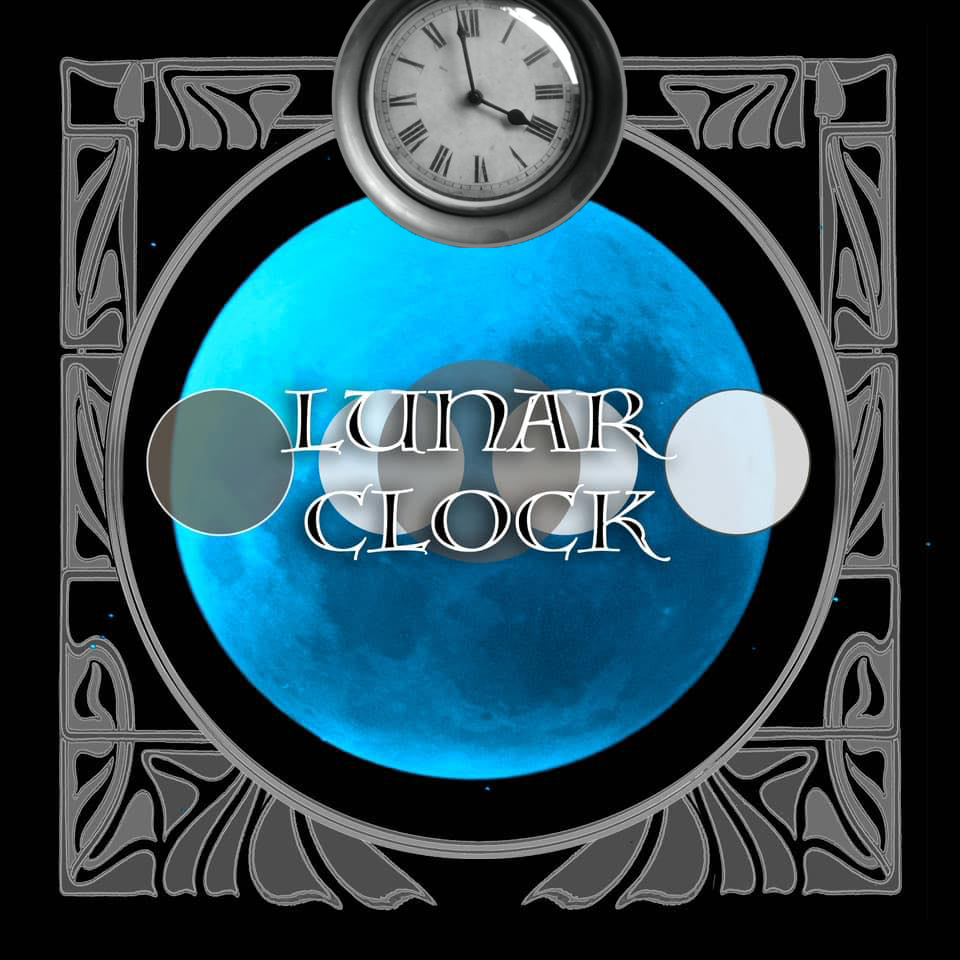
Review 'Lunar Clock II' by Koid9 (France)
2026 April, May June – Koid9, No. 134 – by Renaud Oualid
(English version below)
Dans le numero 116 (Juillet/Août/Septembre 2021) de votre magazine préféré, (décidément toujours) j’avais chronique The Scream Of Nature, disque inspiré des
travaux du peintre norvégien Edvard Munch, mondialement connu pour son tableau Le Cri.
Ce premier opus de Lunar Clock, projet monté en 2014 par le néerlandais Robin Boer était très réussi ! L’équipe qui nous propose ce numéro //, enregistré à Haarlem (Pays-Bas) entre septembre 2024 et janvier 2025, a quelque peu changé, puisqu’il ne reste plus que 3 musiciens (sur 4) : Robin Boer (claviers, chant) et Karsten van Straten (batterie, percussions, effets, claviers, chœurs), épaulés par le nouveau venu Achille Regazzoni (basse, claviers, FX, guitare douze cordes).
Cette nouvelle œuvre se déploie comme une constellation de huit morceaux vastes et autonomes, méticuleusement séquences pour guider l’auditeur dans une dimension sonore profonde. L’album est un voyage à travers les paysages de l’intérieur et de l’extérieur. Il explore courageusement le fossé entre observation et interprétation, la danse de la dualité, et le chemin solitaire vers la transformation et le but. Musicalement, l’album est une évolution profonde et organique du son signature du groupe, tissant obscurité et lumière dans une tapisserie complexe et fluide. Les auditeurs familiers avec leur premier album découvriront des echos conceptuels subtils, offrant une écoute attentive et immersive.
“Metaphors” (7:07) parle des échos de l’être : le voyage plonge dans les paysages de la mémoire. Le titre dérive entre regrets mélancoliques et souvenirs fantômes d’une « Dame de la Mer » explorant la nature immuable du passé. Là encore les mélodies des claviers (sans parler des sons inédits qu’ils en tirent) sont magnifiques ! La basse rappelle celle des meilleurs albums de Kate Bush (Del Palmer).
“Oculus Lunae / Oculus Terrae” (3:14) est le seul instrumental de l’album. La dualité en est le thème central, incarné par le contraste frappant de ce morceau. Une partie incarne le calme froid et acoustique de la lune (OculusLunae) ; l’autre, l’impulsion turbulente et puissante de la Terre (OculusTerrae). Ce sont deux entités qui s’observent mutuellement à travers une division cosmique, leurs natures trop différentes pour être comprises. Littéralement splendide!
Enfin “Life Through Corridors” (8:40) et “The Dreamer” (8:13) parlent de l’Art de l’Existence : l’album confronte la nature de la survie et de la conscience. Le premier, inspiré du texte chinois ancien Les 36 Stratagèmes, est une méditation tendue sur la stratégie et l’endurance. La voix très grave me rappelle Roland Orzabal (Tears for Fears) (ne riez pas, c’est une des plus belles voix du rock !). Le final est apocalyptique (un des meilleurs moments du disque) ! Le second explore l’espace volatile entre les états, où nos plus grandes aspirations et nos angoisses les plus profondes sont enfermées dans une danse éternelle. Encore des claviers orchestraux sublimes et des mélodies à tomber … Et quel final monumental, vraiment (Genesissien).
Signalons enfin le mixage et mastering signé de main de maitre par Bart Wagemakers. L’album est disponible en CD en deux versions distinctes, chacune comportant une pochette et un livret uniques, une de couleur noire par Anemoon van Straten et une de couleur marron par Mauro Ghiglione! Les deux versions sont vendues exclusivement via le site officiel du groupe: lunarclock.nl et lors des concerts. Une sortie numérique sur des plateformes de téléchargement, telles que Bandcamp, et divers services de streaming devrait voir le jour prochainement.
Visit website KoiD9
LUNAR CLOCK II (Self-released / The Netherlands)
In issue 116 (July/August/September 2021) of your (decidedly always) favorite magazine, I reviewed The Scream Of Nature, an album inspired by the works of Norwegian painter Edvard Munch, globally famous for his painting The Scream. This debut effort by Lunar Clock—a project formed in 2014 by Dutch musician Robin Boer—was highly successful!
The team offering us this Volume II, recorded in Haarlem (Netherlands) between September 2024 and January 2025, has changed slightly, as only 3 out of the 4 musicians remain: Robin Boer (keyboards, vocals) and Karsten van Straten (drums, percussion, effects, keyboards, backing vocals), joined by newcomer (Regazzoni is the original bass player, but was credited as ‘Thefar Side’ on the debut album, LC) Achille Regazzoni (bass, keyboards, FX, twelve-string guitar).
This new body of work unfolds like a constellation of eight vast and autonomous tracks, meticulously sequenced to guide the listener into a profound sonic dimension. The album is a journey through internal and external landscapes. It courageously explores the rift between observation and interpretation, the dance of duality, and the solitary path toward transformation and purpose.
Musically, the album represents a deep and organic evolution of the band’s signature sound, weaving darkness and light into a complex, fluid tapestry. Listeners familiar with their first album will discover subtle conceptual echoes, offering an attentive and immersive listening experience.
Instead of a linear concept, the album explores recurring philosophical undercurrents through its music. For instance, the short track opening the album, “Night Owl (announcement)” (2:33), begins with an “announcement” that poses a question of perspective, and concludes with a “conclusion,” “Night Owl (conclusion)” (7:32), where a misalignment leads to darker outcomes. The “night owl” thus serves as a neutral vessel of wisdom, observing truths that the biased human eye so often misses.
Musically, the first part is soft, featuring calm instruments (harp, strange keyboards, bizarre percussion) accompanied by a warm and restful vocal delivery that somewhat reminds me of Gordon Haskell on King Crimson’s “Cadence & Cascade”. The second part (almost entirely instrumental, save for a reprise of the lyrics from the first part) is distinctly stranger still: keyboards appearing out of nowhere with jazz-rock solos, asymmetrical rhythms, and jazzy digressions—at times, we are not far from RIO (Rock in Opposition)! In short, the originality of this music is striking!
“Sateria” (9:01) and “Where The Birds Hide” (9:51) share the same thematic core: the harmony of opposites. The album finds beauty in rare moments of connection. “Where The Birds Hide” tells the story of two birds—one of the day, the other of the night—who only meet at twilight to share stories of their hidden worlds. This theme of peace is mirrored in “Sateria”, a powerful anthem about the catharsis of letting go and a deep acceptance of what is. On the former track, we find magnificent keyboards (what superb central and final solos!), paired with a laid-back rhythm section and a poised, naturally beautiful vocal delivery. Meanwhile, on the latter track, all-out experimentations recall 1970s Pink Floyd, particularly Rick Wright, Nick Mason, or Roger Waters! Yes, this music is inventive and of pure beauty; keyboard lovers will be in heaven.
“Metaphors” (7:07) speaks of the echoes of the self: the journey dives deep into the landscapes of memory. The track drifts between melancholic regrets and the phantom memories of a “Woman of the Sea,” exploring the immutable nature of the past. Here again, the keyboard melodies (not to mention the unprecedented sounds they extract from them) are magnificent! The bass lines recall those found on the best Kate Bush albums (Del Palmer).
“Oculus Lunae / Oculus Terrae” (3:14) is the album’s sole instrumental. Duality is its central theme, embodied by the striking contrast within the piece. One part embodies the cold, acoustic calm of the moon (Oculus Lunae) ; the other, the turbulent and powerful impulse of the Earth (Oculus Terrae). They are two entities observing each other across a cosmic divide, their natures too disparate to be mutually understood. Literally splendid!
Finally, “Life Through Corridors” (8:40) and “The Dreamer” (8:13) speak of the Art of Existence: the album confronts the nature of survival and consciousness. The first, inspired by the ancient Chinese text The 36 Stratagems, is a tense meditation on strategy and endurance. The very deep vocals remind me of Roland Orzabal (Tears for Fears) (do not laugh, it is one of the most beautiful voices in rock!). The finale is apocalyptic—one of the finest moments on the record! The second track explores the volatile space between states, where our greatest aspirations and deepest anxieties are locked in an eternal dance. It features more sublime orchestral keyboards and drop-dead gorgeous melodies… And what a monumental, truly Genesis-esque finale.
Lastly, let us note the masterful mixing and mastering handled by Bart Wagemakers. The album is available on CD in two distinct versions, each featuring a unique cover art and booklet: a black-colored version by Anemoon van Straten and a brown-colored version by Mauro Ghiglione! Both versions are sold exclusively via the band’s official website (lunarclock.nl) and at their concerts. A digital release on download platforms, such as Bandcamp, and various streaming services is expected to see the light of day in the near future.
Renaud Qualid
Author: © Lunar Clock
Lunar Clock - Cinematic art rock from The Netherlands
Recent Comments